What Are These Black Streaks on My Roof?
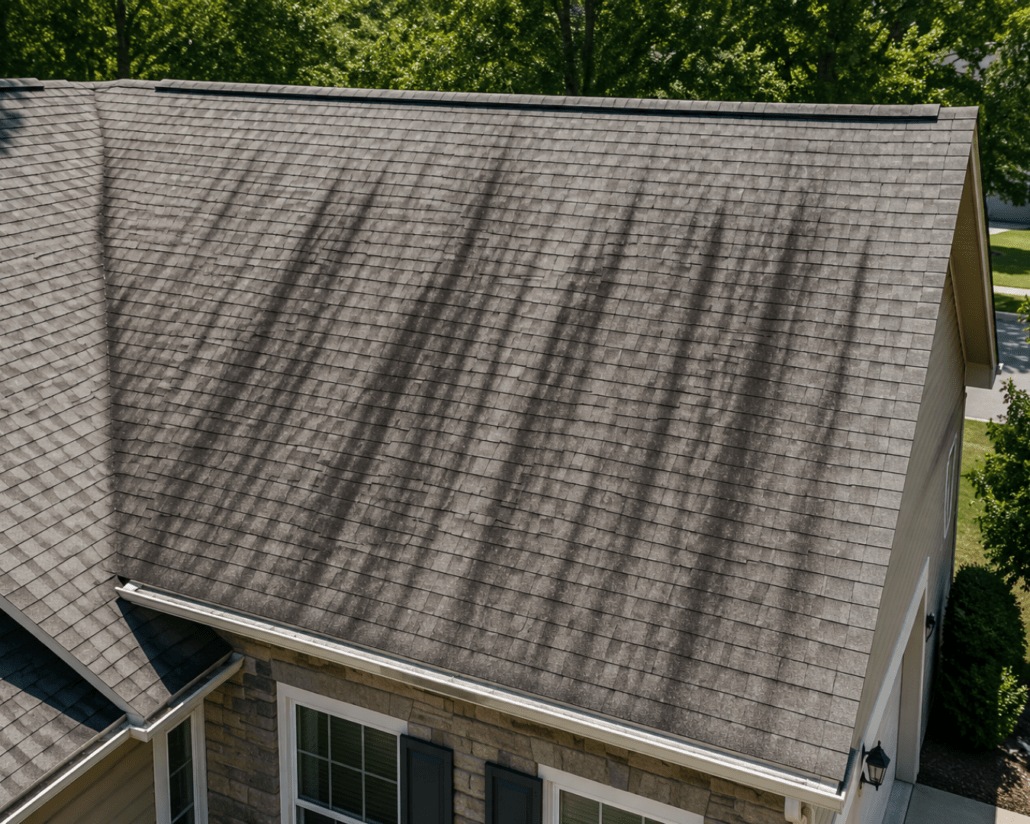
You look up at your roof one day and notice dark streaks running down the shingles. At first, you might assume it’s dirt, pollen, mold, or simply a sign that your roof is getting older.
The good news? Those black streaks usually aren’t a sign that your roof is failing.
The bad news? They shouldn’t be ignored either.
At Turn Key Roofing, this is one of the most common questions we hear from homeowners throughout Anderson, Greenville, Clemson, Seneca, and the surrounding Upstate communities. Here’s what those black streaks actually are, why they appear, and what you can do about them.
What Causes Black Streaks on a Roof?
In most cases, those dark streaks are caused by a type of algae called Gloeocapsa magma.
This airborne algae spreads through spores that travel in the wind and settle on roofing surfaces. Once it finds a suitable environment, it begins to grow and spread across the shingles.
The algae feeds on moisture and thrives in humid environments, making South Carolina a perfect place for it to grow. While it often starts as a few small spots, it can eventually create the dark streaks many homeowners notice from the street.
Why Are They So Common in the Upstate?
Our climate creates ideal conditions for algae growth.
Several factors contribute to black streaks, including:
- High humidity
- Warm summer temperatures
- Frequent rainfall
- Shade from trees
- Moisture that remains on the roof for long periods
Homes with significant tree coverage often experience algae growth faster because shaded areas stay damp longer after rain or morning dew.
Are Black Streaks Damaging My Roof?
This is where many homeowners get confused.
The streaks themselves are primarily a cosmetic issue at first. They can make a roof appear older, dirtier, and less maintained than it actually is.
However, that doesn’t mean they should be ignored forever.
As algae continues to spread, it can:
- Trap additional moisture against roofing materials
- Contribute to the growth of moss or lichen
- Impact your home’s curb appeal
- Potentially shorten the lifespan of roofing materials over time
If you’re planning to sell your home, black streaks can also create a negative first impression for potential buyers.
How Can I Prevent Black Streaks?
While no roof is completely immune, there are several ways to reduce the likelihood of algae growth:
Trim Overhanging Trees
Allowing more sunlight to reach your roof helps it dry faster after rain and morning dew.
Keep Gutters Clean
Clogged gutters can contribute to excess moisture around the roofline.
Schedule Regular Roof Inspections
Routine inspections help identify algae growth, debris buildup, and other maintenance concerns before they become larger problems.
Consider Algae-Resistant Shingles
Many modern roofing systems are manufactured with algae-resistant technology that helps slow the growth of black streaks.
If you’re replacing your roof, this is an option worth discussing.
Sometimes It’s More Than Algae
Not every dark mark on a roof is caused by algae.
What appears to be a simple streak could also indicate:
- Moss growth
- Lichen
- Debris accumulation
- Moisture retention issues
- General aging and wear
A professional inspection can determine exactly what’s happening and whether any action is needed.
When Should You Have Your Roof Inspected?
If you’ve noticed black streaks appearing or spreading across your roof, it’s a good idea to have it evaluated.
An inspection can help determine:
- What’s causing the discoloration
- Whether any damage is present
- If cleaning is recommended
- Whether repairs or maintenance may be needed
In many cases, catching issues early can help extend the life of your roof and maintain your home’s appearance.
Turn Key Roofing Is Here to Help
If you’ve been wondering what those black streaks on your roof are, you’re not alone. They’re a common issue throughout Upstate South Carolina, especially during our warm, humid months.
At Turn Key Roofing, we provide free roof inspections for homeowners throughout Anderson, Greenville, Clemson, Seneca, Easley, and surrounding communities. We’ll help you determine what’s causing the discoloration and recommend the best course of action for your roof.
Contact Turn Key Roofing today to schedule your free roof inspection and keep your roof looking and performing its best.